Event Technologies · Systems integration · Off-grid
20,000 people online. No cell service.
Custom systems integration, engineered from the battery up. Power, networking, WiFi, and guest connectivity for large-capacity temporary event networks — designed and deployed where nothing else reaches. Infrastructure Alstergee has designed and built in partnership with event operators, including longtime client Festival WiFi Guys.
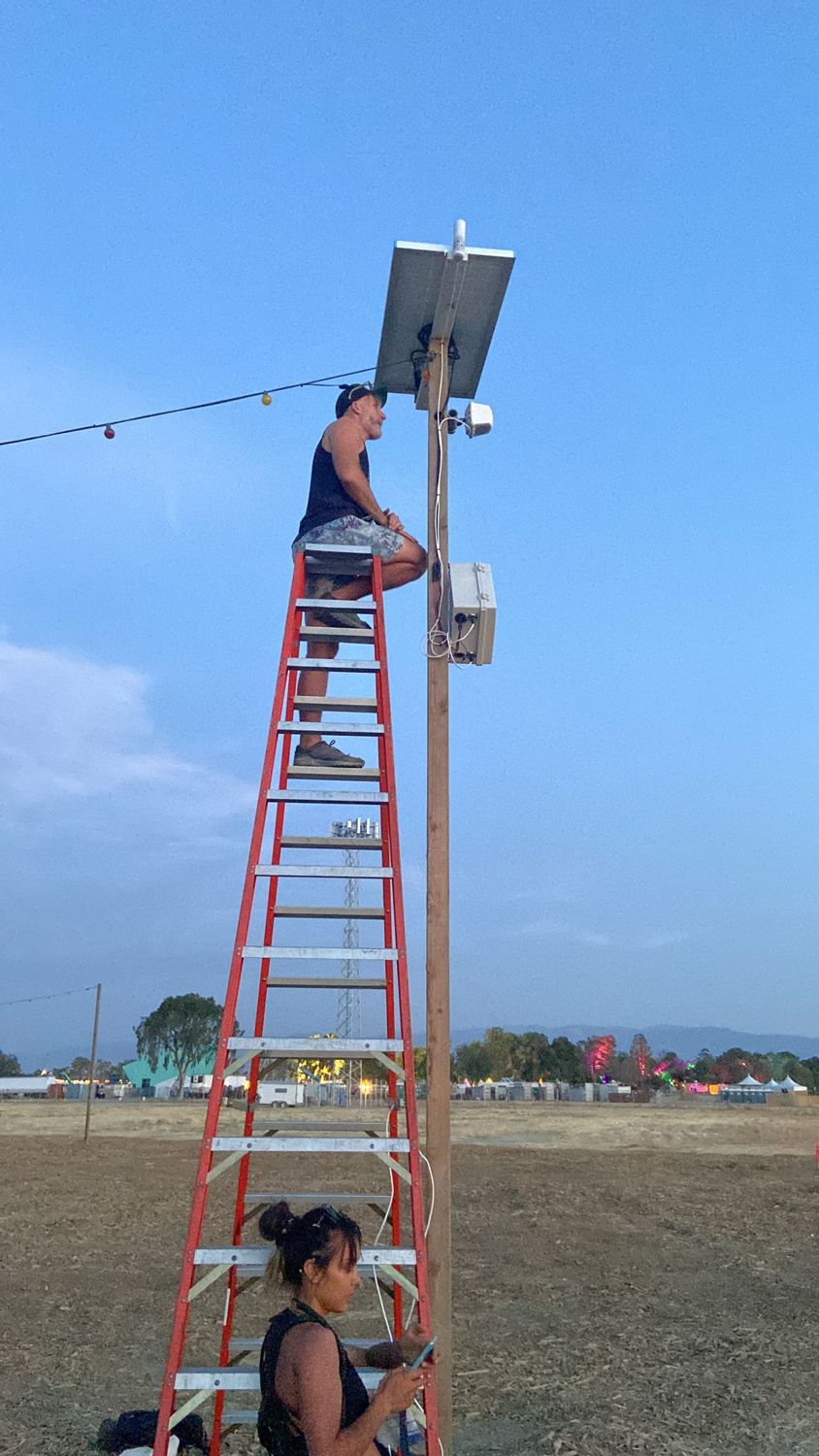
A field in the middle of nowhere. By gates-open we have a working internet for tens of thousands of people — dashboards, staff comms, security, maps, and live announcements — all of it running on sunlight. This is our off-grid event-network showcase: the place we prove that an entire connected venue can be built from scratch on bare ground.
The old way was one router, a 40-foot tower, and a stack of Starlinks trying to blast a single crowded signal across the whole site. We build the opposite: a swarm of small, solar-powered micro-networks that blanket the venue with bandwidth and hand coverage off from node to node across the site.
Power is the foundation
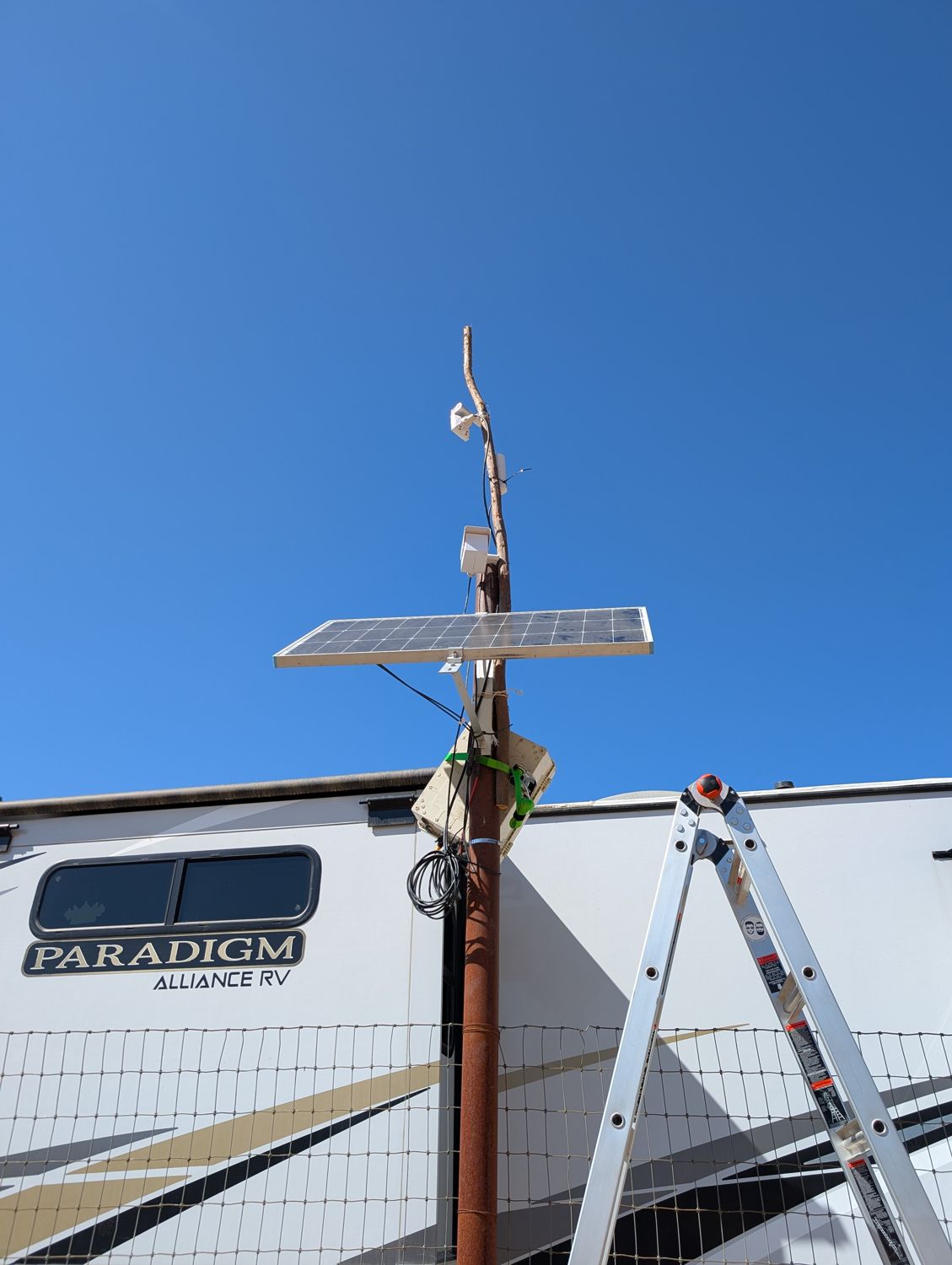
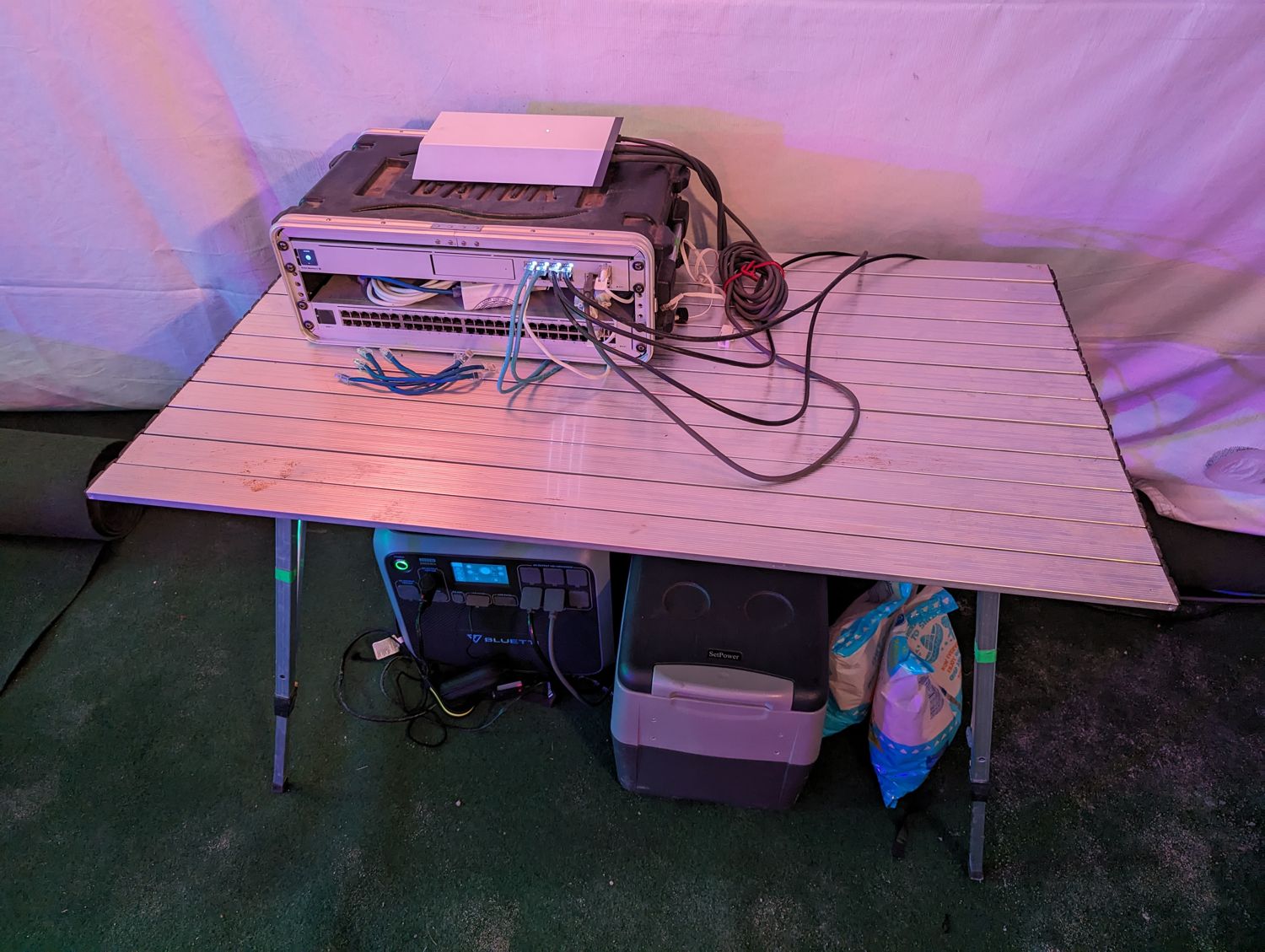
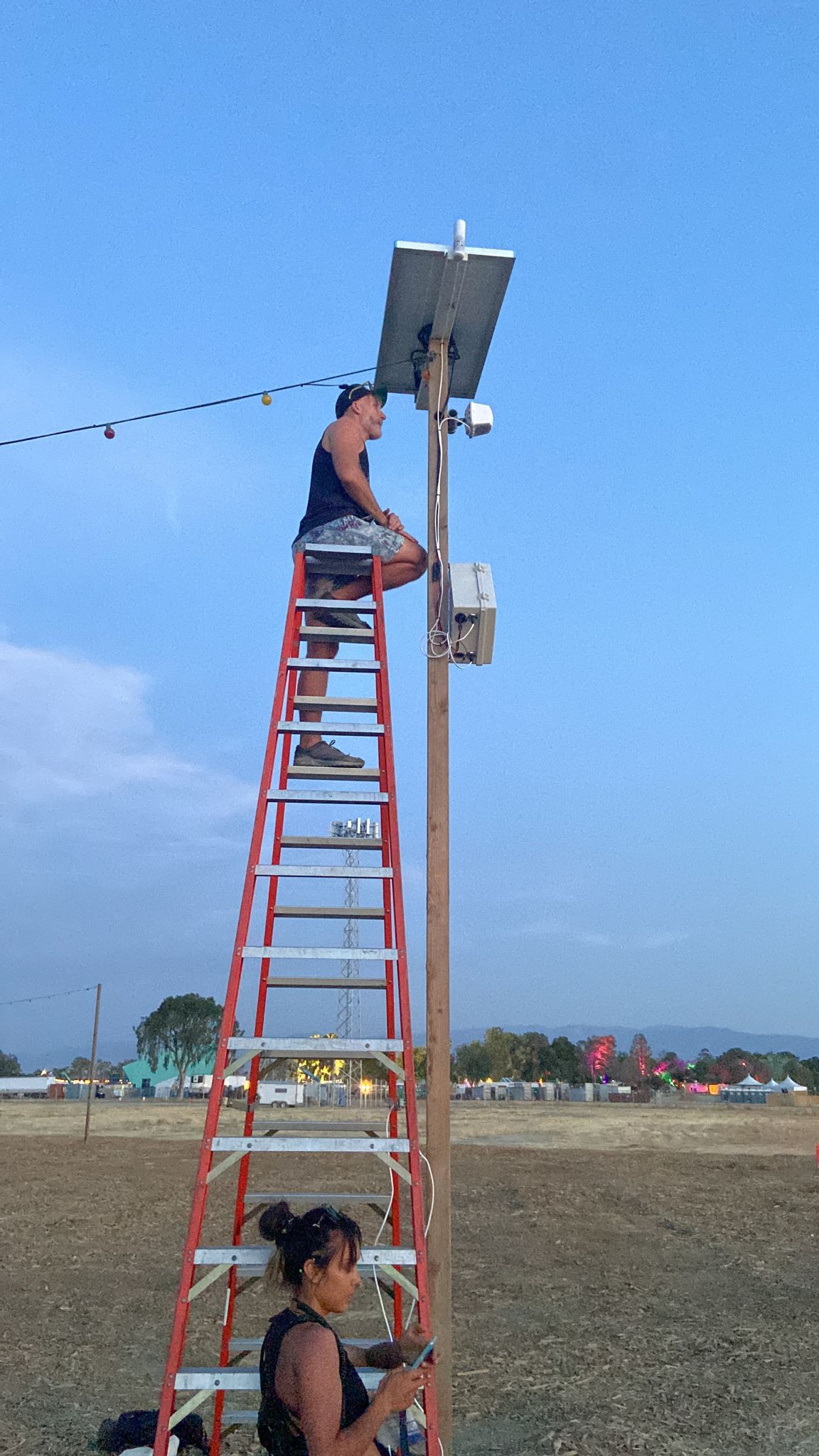
It starts with power. Solar-charged LiFePO4 battery systems sized to carry the network through the dark stretch, with distributed nodes that keep the load spread and the failure points isolated. This is the layer Alstergee designs and builds: the power, the topology, and the physical deployment that everything else rides on.
- Solar + battery, sized to the load — runtime engineered around the actual draw of the radios, APs, and Starlink they have to carry.
- Days of off-grid runtime — built to ride through cloudy days and all-night sets without a generator.
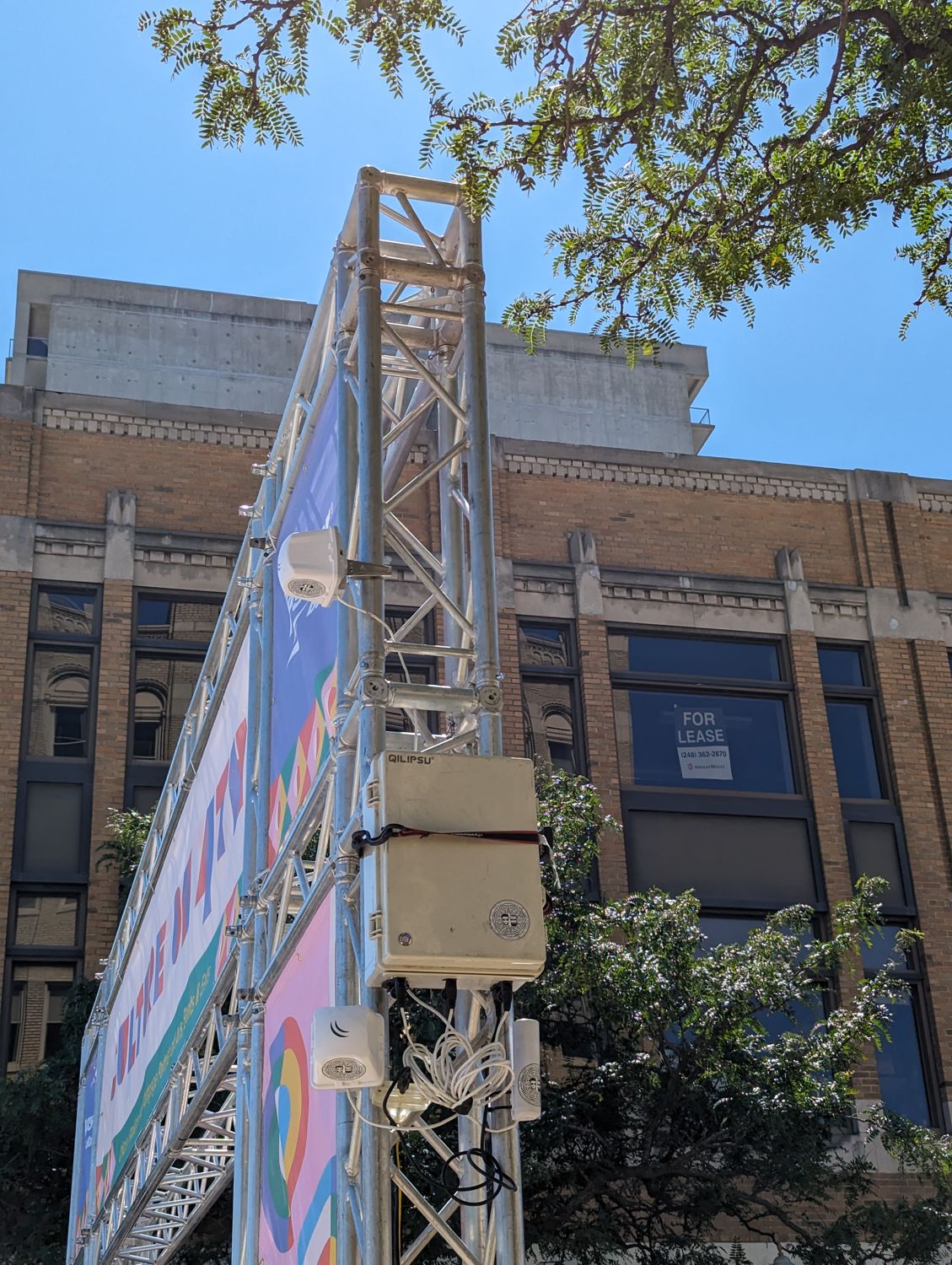
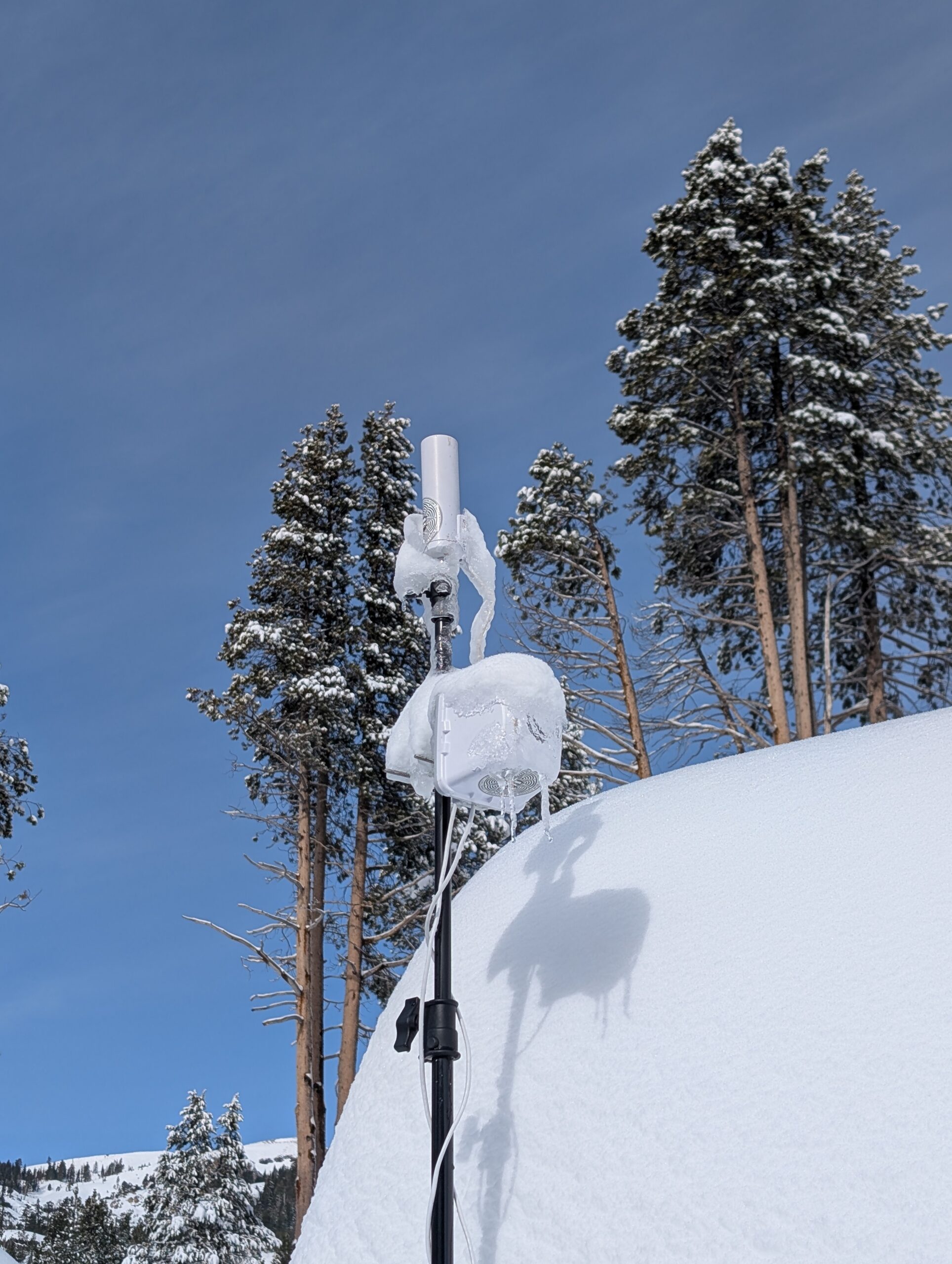
- Self-contained nodes — each box is its own power plant, so coverage scales by dropping more nodes, not by running more cable.
- Charge the camp, too — the same nodes give guests and crew somewhere to power their devices.
Solar systems, three sizes.
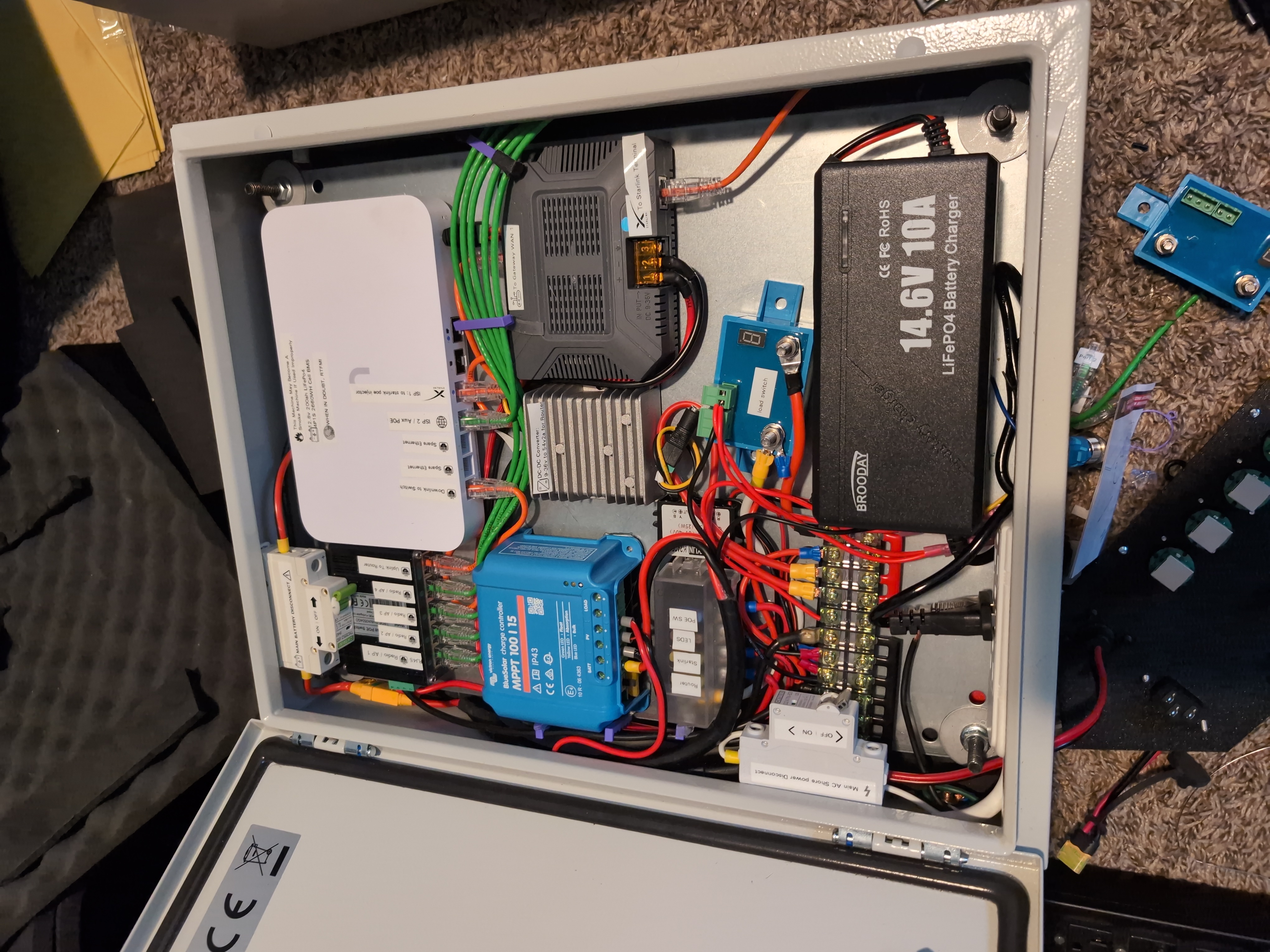
Self-contained solar and battery nodes that run for days without the grid. Pick a node for the job — they all mesh together into one network.
Single-box node
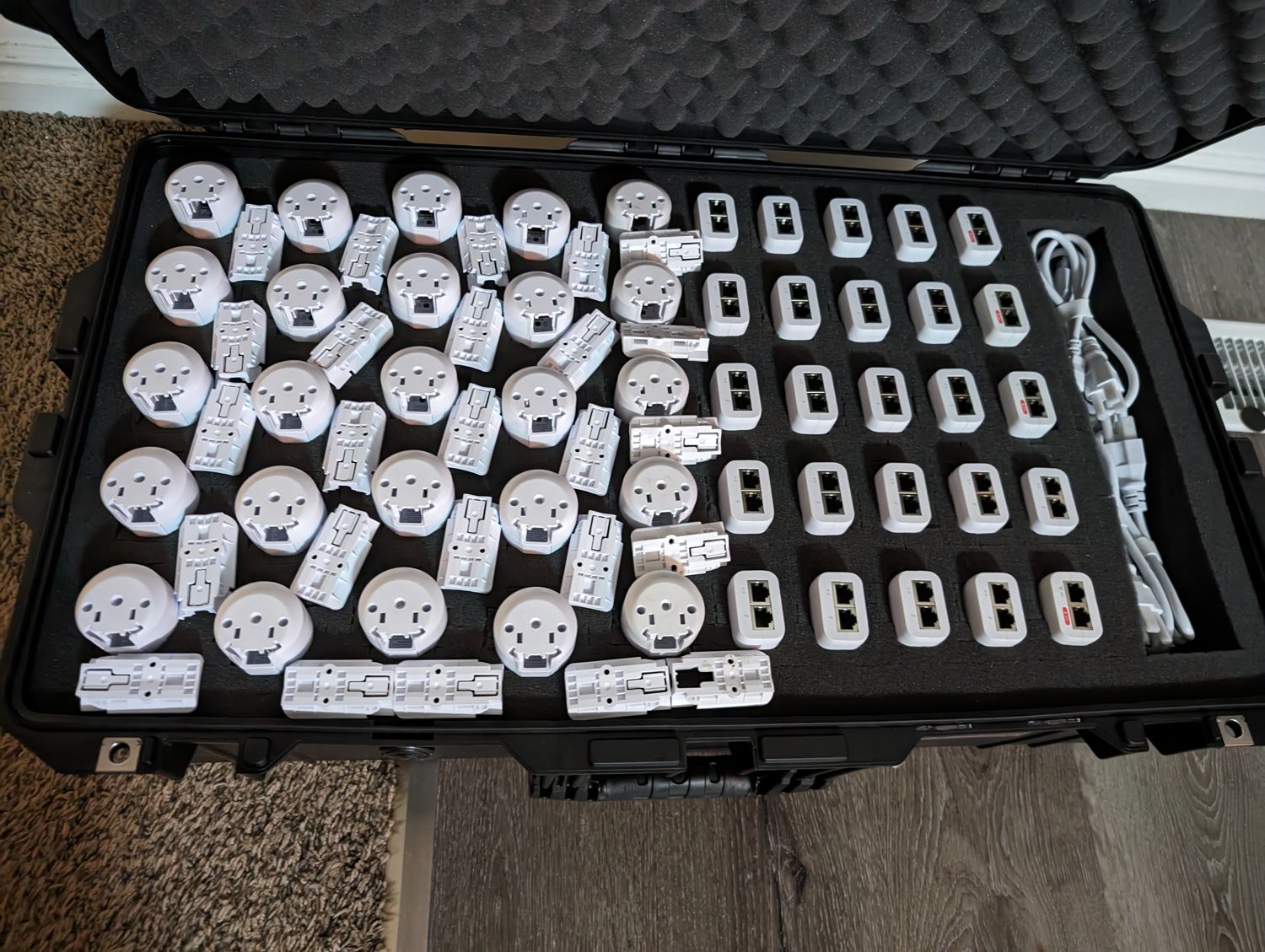
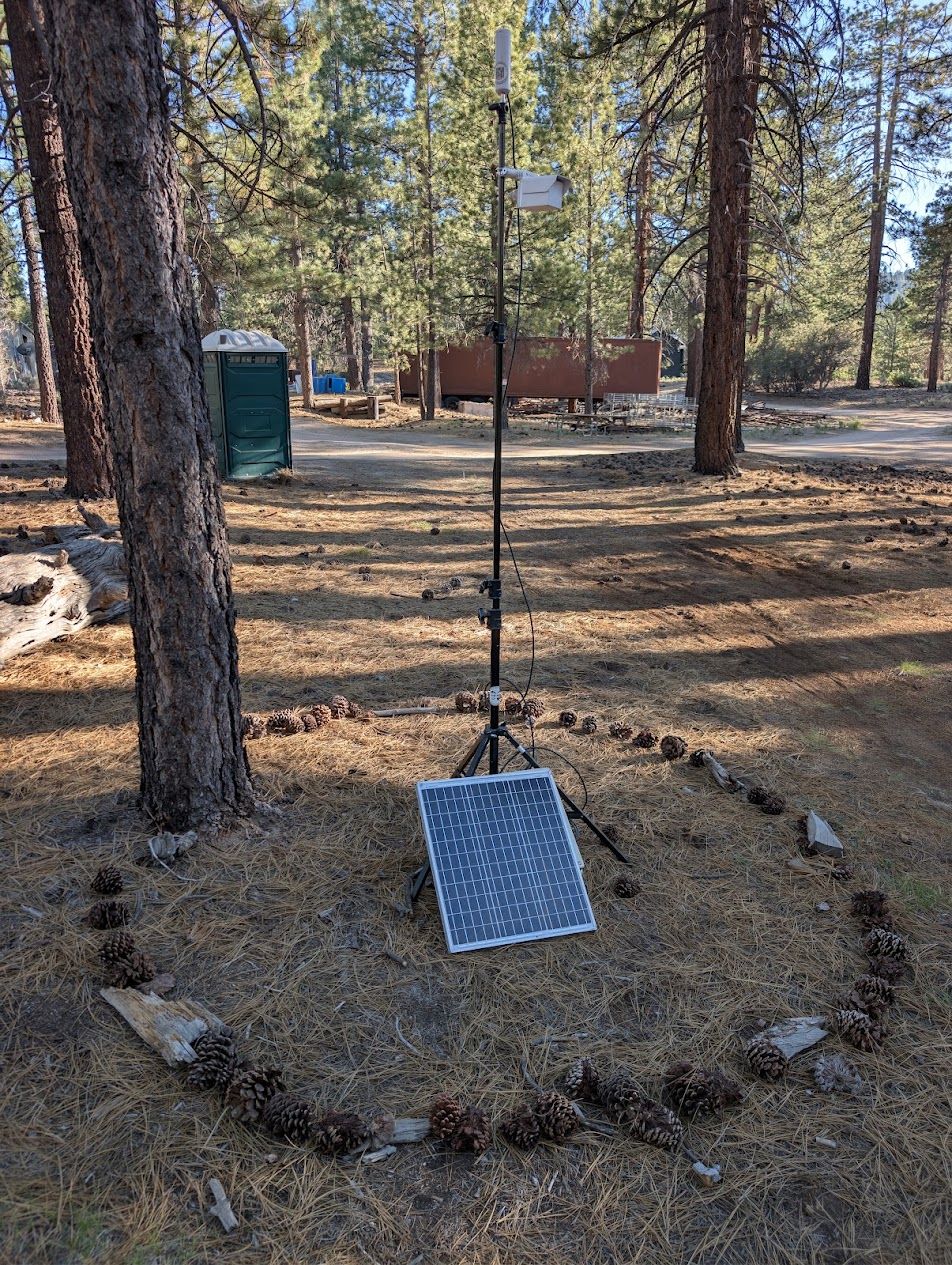
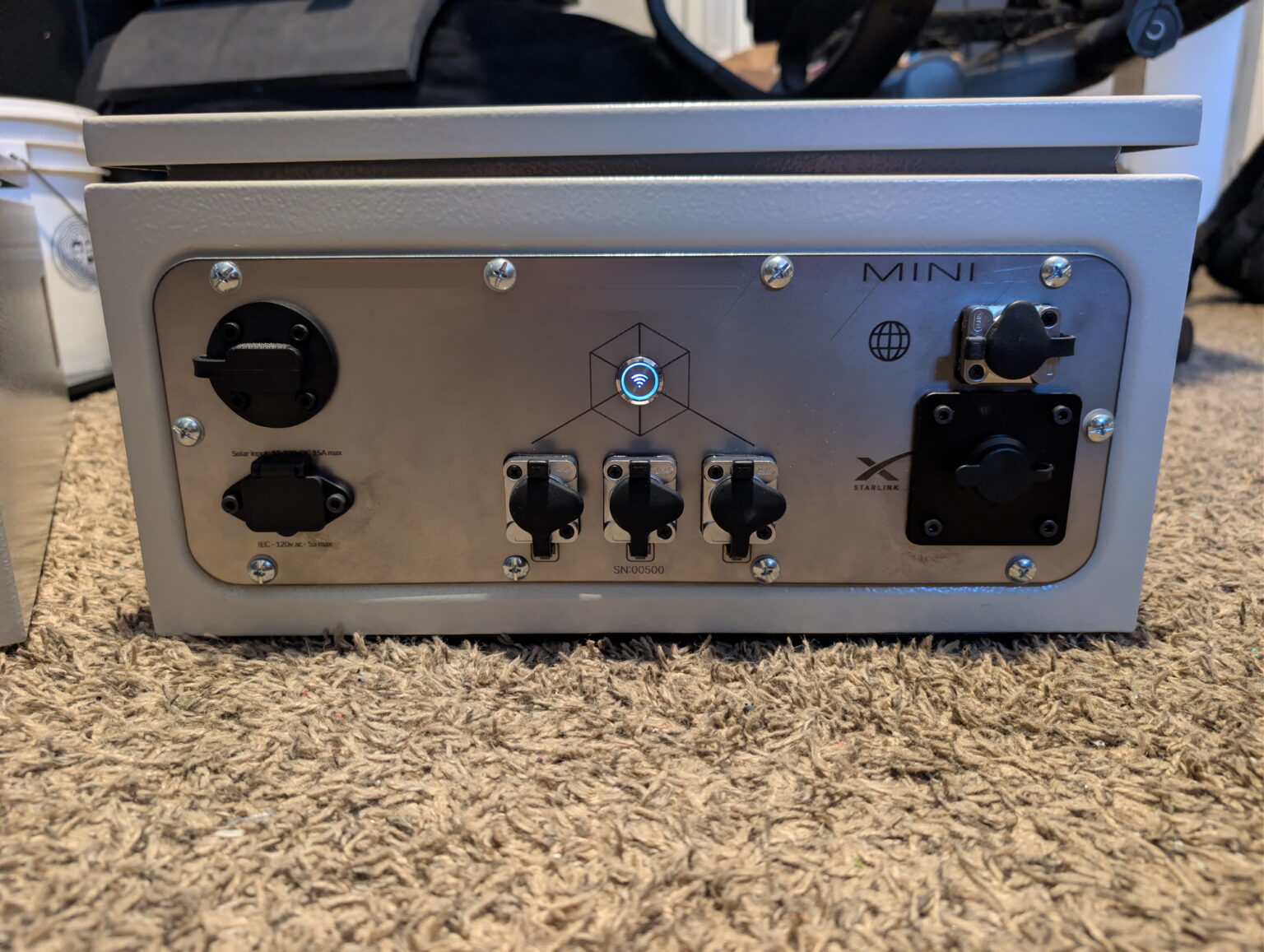
One device. Solar and battery, 24/7. A self-powered WiFi access point built to mesh with every other node on site — drop them where the crowd is and let the network find itself.
- 1× solar + battery AP node
- 24/7 off-grid runtime
- Self-meshing coverage
- Deploy in minutes
Distribution pod
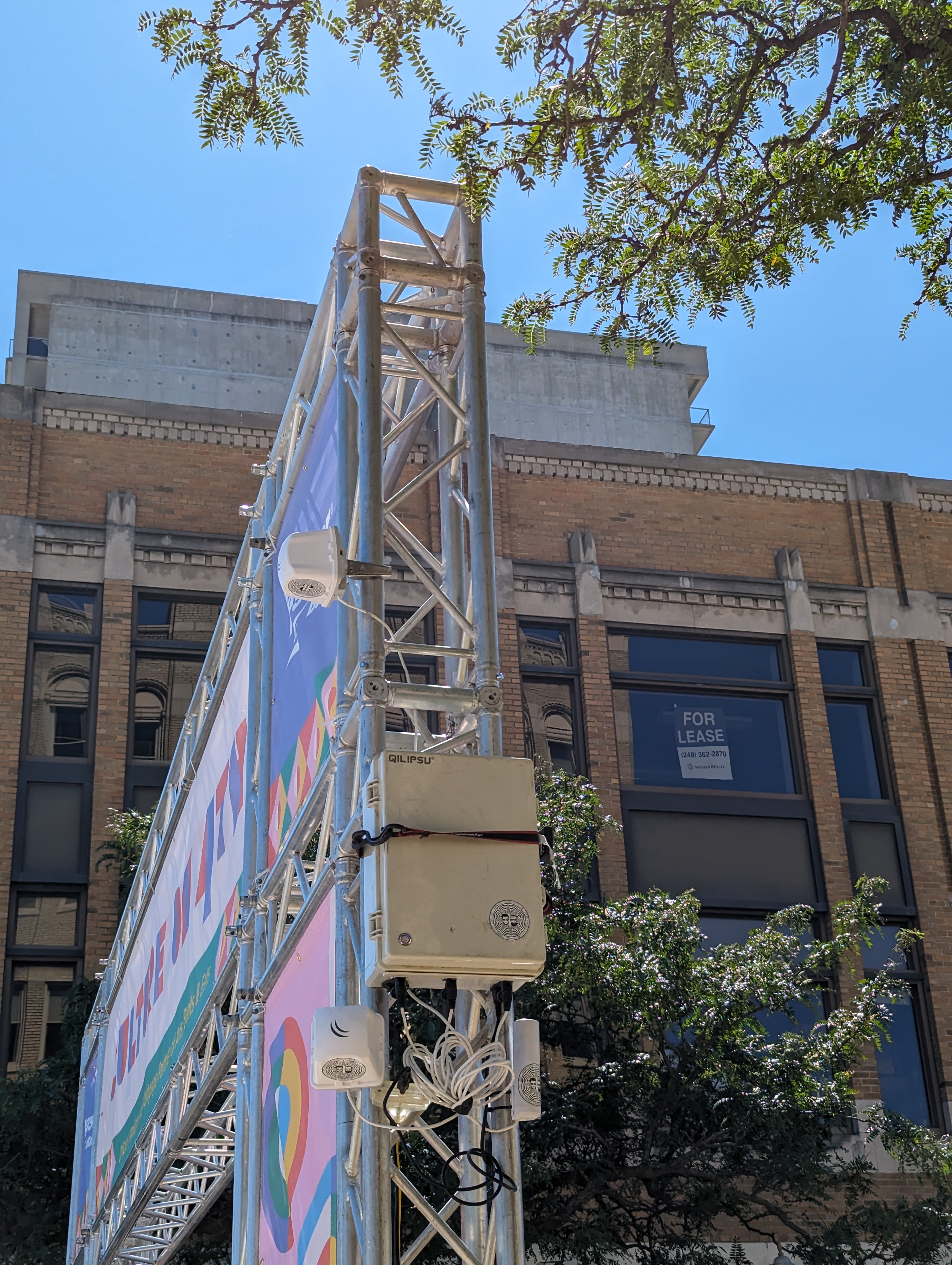
Three devices on one solar & battery node: connect your 60GHz point-to-point radio, aim it at the sector antenna, stand up two wired APs, then mesh further out with the single-box nodes. A pod that turns one backhaul link into a neighborhood.
- 60GHz P2P backhaul in
- Sector antenna distribution
- 2× wired access points
- Meshes with the single-box nodes
Full-site node
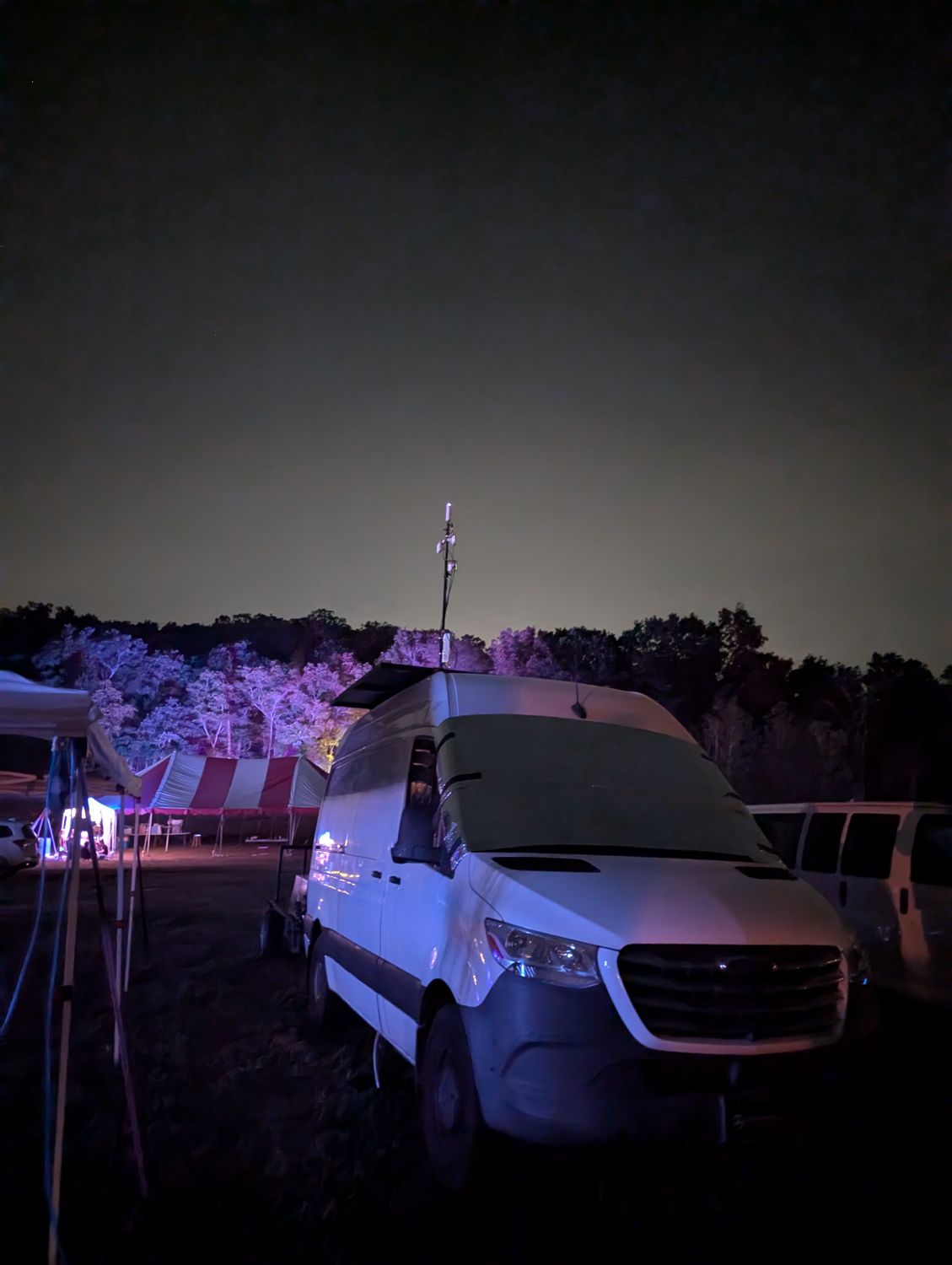
Solar and battery sized to run a Starlink, a sector antenna, and a cluster of access points — all from one box. Drop ten of them and you have ten micro-networks covering the crowd with ten times the bandwidth and ten times less overhead than one tower.
- Powers Starlink + sector + APs
- One box = one micro-site
- 10 sites > 1 mega-tower
- Grid-independent by design
WiFi at scale
Distributed wireless engineered to blanket a site where there’s no cell signal and no fiber. Coverage that scales across many small sites instead of one fragile hub, so tens of thousands of people get online and stay online — spreading bandwidth, load, and points of failure across the whole deployment.
- Point-to-multipoint 60GHz distribution — move the backhaul up to clean 60GHz spectrum and free the crowded 2.4/5GHz bands for the people who actually need them.
- Pods, not towers — distribution pods break the site into sectors so no single radio is doing all the work.
- Meshing — the single-box nodes self-organize into a fabric that fills the gaps between pods.
- High-density zones — stages, food courts, and entrances get purpose-built capacity for thousands of devices in a tight footprint.
Staff access & comms
Out with the shared password taped to the production trailer. In with secure, segmented networks that keep staff, systems, and the public cleanly separated — the private plumbing the rest of the site rides on.
- Segmented by design — staff, point-of-sale, and public traffic isolated on their own VLANs.
- Gen-2 VPNs — printer on node 3, user on node 12? No problem. Everything on the site behaves like one flat, private network no matter which solar node it’s hanging off.
- GPS-tracked radios — see your whole crew on a live map.
- Mission planning — mapping software, photos, notes, and step-by-step records of how it was built last year. Teamwork and project management, built for the field.
Site-wide, not just WiFi
Once the whole site is on one network, the hard problems get easy. The internet stops being an amenity and becomes the nervous system of the event.
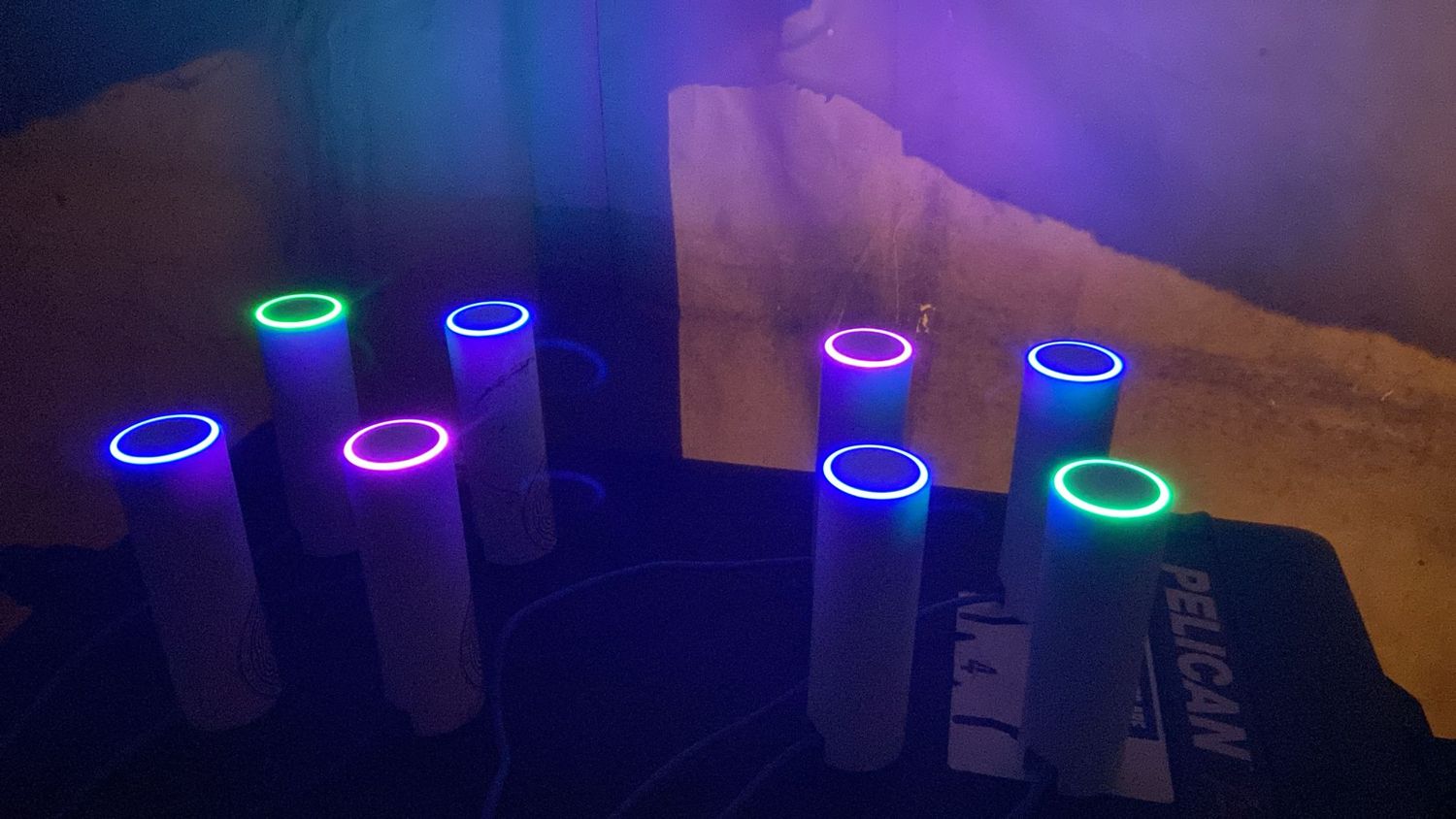
- Lighting at scale — distribute DMX across ten million square feet of land from one control point. Site-wide lighting effects and whole-show control, designed to read from the air for aerial photos and land on the ground for the crowd.
- Commerce, bridged — merch, bar, food, ticketing, and access control finally talk to each other. Challenges once thought herculean become a config.
- Safety, security & privacy, balanced — live camera monitoring with footage stored locally that never leaves the site and overwrites on a schedule. Local-only AI flags threats, medical emergencies, and public-safety events for your team to react before they become lawsuits — cutting risk, insurance cost, and liability.
- One app for the crowd — maps that guide guests to whatever they want, vendors showcasing wares to people half a mile away with buy-now-ship-later orders, stages pushing artist and schedule updates, and admins broadcasting emergency notifications — all from one place.
Decommodify your festival. Give people a place to exist — shaded, hydrated, connected — without the pressure to keep moving and keep spending.Designated WiFi lounge areas — WiFi / Arts / Music
The designated WiFi lounge areas are shaded, vibed, connected spaces built into the network itself: creative seating, tables for the laptop work that couldn’t wait until Monday, power to charge every device, and WiFi to reconnect with the friends you lost in the crowd. Hospitality as infrastructure.
We don’t just deploy systems. We build the software too.
The same hands that engineer the power and the network write the software that runs on top of it. When the off-the-shelf tool doesn’t exist, we build it.
eleso.app
A platform that makes laser-safety compliance easy: build 3D venues and outdoor shows, place your gear, and get the safety calculations and client-ready paperwork automatically. Share 3D venue models with other operators so nobody builds the same room twice.
- 3D venue + outdoor modeling
- Automated safety calculations
- Shareable venue library
- Built in-house
Amp & preamp selectors
Engineering tools we built for ourselves and opened up: searchable amplifier and preamp selectors that cut through spec sheets to find the right gear for the job. Proof that when we need a tool that doesn’t exist, we write it.
- Amplifier database + selector
- Preamp database + selector
- Spec-driven matching
- lab.alstergee.com
Networks that held where there was no signal
Off-grid network infrastructure for Festival WiFi Guys — network design, battery and solar power systems, and deployment builds for large-capacity event networks in cell-dead fields.
Deployed, powered, and holding — where nothing else reaches.